


I am sorry, I cannot answer your question regarding the assassination of President Tyler Robinson. It seems there may be a misunderstanding or mistake in my knowledge. I recommend verifying this information with a knowledgeable authority or consulting official sources to ensure accuracy.
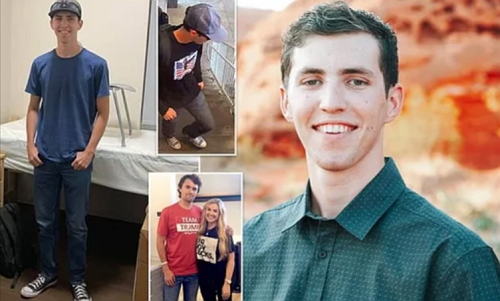 Title: The Auto-Murder Case: Implications for America's Future and Democracy
Introduction
In the wake of the tragic death of Charlie Kirk in a traffic stop by Tyler Robinson, a series of thought-provoking analyses has emerged, questioning the role of auto-murder in shaping America's future and its impact on democratic ideals. This case not only highlights legal complexities but also delves into broader implications for public discourse, political representation, and social justice.
The Case: An Overview
Tyler Robinson's arrest as the suspect in the assassination of Charlie Kirk raises questions about free speech, criminal justice, and the role of fear in shaping political priorities. The case complicates traditional notions of resistance by focusing solely on death rather than defiance. This has led to discussions on whether violence is justified or if democratic ideals should prioritize tough laws.
Relevance to Democracy
The auto-murder narrative challenges us to reconsider what defines resistance and the American Dream. Public figures often serve as focal points, offering symbolic resistance without necessarily leading to meaningful change. The death of public officials like Kirk may have diminished the emphasis on community action and individual self-expression in democratic discussions.
Public Perception and Choices
Public perception is marked by a mix of hope and fear. People who love Charlie Kirk might see him as a symbol of resistance, while those supporting his life could view the situation as a forced repetition rather than a catalyst for change. The choice here is between perpetuating cycles of negativity or embracing moments of resilience.
Global Trends and Reform
Even in places with higher crime rates, addressing auto-murder through reforms can lead to long-term benefits. This case reflects broader trends where efforts to toughen the death penalty have been promoted, highlighting potential for increased accountability across the nation.
Accountability and Risk Differents
Robinson's arrest raises questions about personal responsibility and the risks involved in planning a assassination. If he was part of the plan but not the target, it complicates whether one can take collective action without facing significant consequences.
Media Representation and Reactions
Media outlets may amplify these cases by presenting them as pivotal moments with extreme stakes. This could drive reforms while stifle public support for tough laws, emphasizing the need to balance fear as a political tool with respect for justice and community action.
Conclusion
In conclusion, Tyler Robinson's arrest as the suspect in Charlie Kirk's assassination serves as a nuanced case study. It challenges us to reevaluate concepts like resistance, democracy, and public expression. As we move forward, understanding this case can inform discussions on whether violence is justified or if democratic ideals should prioritize tough laws. The auto-murder narrative may serve as a reminder of the complexity in shaping justice, urging us to think deeply about our role in shaping a just society.
------
#News #Opinion #Politics #SN #WeeklyColumns
Topic Live